


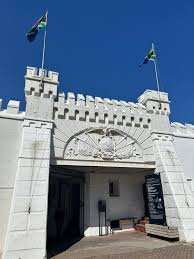
Constitution Hill is one of the most significant historical and cultural landmarks in South Africa, symbolizing the nation’s transformation from a history of oppression to a democracy founded on justice and human rights. Located in Johannesburg, this site has served multiple roles throughout history, most notably as a notorious prison complex that housed political activists, common criminals, and even ordinary citizens caught up in oppressive laws. Today, it stands as a testament to resilience, housing South Africa’s highest court—the Constitutional Court—where laws are upheld in the spirit of freedom and equality.
This iconic site serves as a reminder of the struggles endured during the apartheid era and the triumph of democracy. Visitors to Constitution Hill gain insight into South Africa’s past, while also witnessing its progressive journey toward justice and reconciliation. The site is more than a historical landmark; it is a place of learning, reflection, and hope for the future.
The History of Constitution Hill
Origins and Early Use as a Fort
Constitution Hill’s history dates back to the late 19th century when it was initially used as a military fort by the Boer government. The location provided a strategic vantage point over Johannesburg, allowing military forces to defend the city. However, with the discovery of gold in the region and the subsequent expansion of Johannesburg, the site soon took on a different role.
Transformation into a Notorious Prison
By the early 20th century, Constitution Hills was converted into a prison, known as the Old Fort. Over time, additional facilities such as the Number Four Prison and the Women’s Jail were constructed. This prison became infamous for its harsh treatment of inmates, particularly black South Africans who were subjected to appalling conditions under racist policies.
Many political activists, including Nelson Mandela, Mahatma Gandhi, Albertina Sisulu, and Winnie Madikizela-Mandela, were imprisoned at Constitution Hill. Their experiences within these walls highlight the brutal enforcement of apartheid laws and the systemic oppression of the time.
Constitution Hill as a Symbol of Apartheid Resistance
During apartheid, Constitution Hill was a place of suffering, but it also became a symbol of resistance. Political detainees were often subjected to physical abuse, overcrowding, and inhumane living conditions. Despite these hardships, many activists used their time in prison to strategize and reinforce their commitment to fighting for justice.
Notably, Nelson Mandela was held at Constitution Hill before his trial and eventual imprisonment on Robben Island. His letters and reflections from this period provide a deep understanding of the sacrifices made in the pursuit of freedom. Gandhi, too, was imprisoned here during his early activism against racial discrimination in South Africa, laying the foundation for his philosophy of nonviolent resistance.
The Birth of the Constitutional Court

A New Era of Justice
Following the fall of apartheid and the establishment of democracy in 1994, the South African government sought to transform Constitution Hill from a place of oppression into a beacon of hope. In 1995, it was chosen as the site for the Constitutional Court, the highest court in the land dedicated to upholding the values enshrined in the new democratic constitution.
The court officially opened in 2004, and its design incorporates bricks from the old prison buildings, symbolizing the country’s journey from injustice to justice. The Constitutional Court not only hears cases related to human rights and constitutional matters but also stands as a monument to South Africa’s progress.
Architectural and Artistic Significance
The Constitutional Court’s architecture is a blend of historical preservation and modern innovation. The artwork and inscriptions found throughout the court complex reflect the principles of democracy, human dignity, and equality. The doors of the court, engraved with the 27 rights enshrined in the South African Constitution, serve as a powerful reminder of the nation’s commitment to justice.
Exploring Constitution Hill Today
A Living Museum and Educational Hub
Today, Constitution Hill serves as a living museum where visitors can explore the remnants of its past, including the Old Fort, Number Four Prison, and the Women’s Jail. Guided tours offer a deeper understanding of the site’s history, with exhibits featuring personal accounts from former prisoners and interactive displays that bring history to life.
Events and Public Engagement
Constitution Hill is not just a historical site but also a space for dialogue and learning. It regularly hosts events, panel discussions, and exhibitions that promote human rights and social justice. The site’s commitment to education ensures that future generations understand the importance of democracy and the rule of law.
Why Constitution Hill Matters
Constitution Hill stands as a crucial reminder of South Africa’s past while inspiring future generations to uphold the values of freedom and justice. It serves as a place of remembrance, but also as a symbol of resilience and progress. Visitors leave with a profound appreciation for the sacrifices made to achieve democracy and the ongoing work required to preserve it.
Conclusion
Constitution Hill is more than just a historical landmark; it is a testament to the enduring spirit of justice, equality, and human rights. From its dark past as a prison to its transformation into the seat of the Constitutional Court, the site embodies South Africa’s journey from oppression to freedom. A visit to Constitution Hill is an essential experience for anyone looking to understand the country’s history and its commitment to democracy. As South Africa continues to evolve, Constitution Hill remains a powerful reminder that the pursuit of justice is an ongoing process that requires vigilance and dedication.
Read more: Man Utd New Stadium: The Future of Old Trafford
FAQ’s Section
Constitution Hill is a historic site in Johannesburg, South Africa, that served as a notorious prison during apartheid and now houses the Constitutional Court, the highest court in the country.
Notable prisoners include Nelson Mandela, Mahatma Gandhi, Winnie Madikizela-Mandela, and Albertina Sisulu, all of whom played crucial roles in South Africa’s struggle for freedom.
Visitors can explore former prison buildings, such as the Old Fort, Number Four Prison, and the Women’s Jail, as well as the Constitutional Court, which features historical artifacts and artwork.
It symbolizes the country’s transition from apartheid to democracy and serves as a reminder of the struggle for human rights and justice.
Constitution Hill is open to the public, offering guided tours, exhibitions, and educational programs. Visitors can access it in Johannesburg via public transport or private tours.