


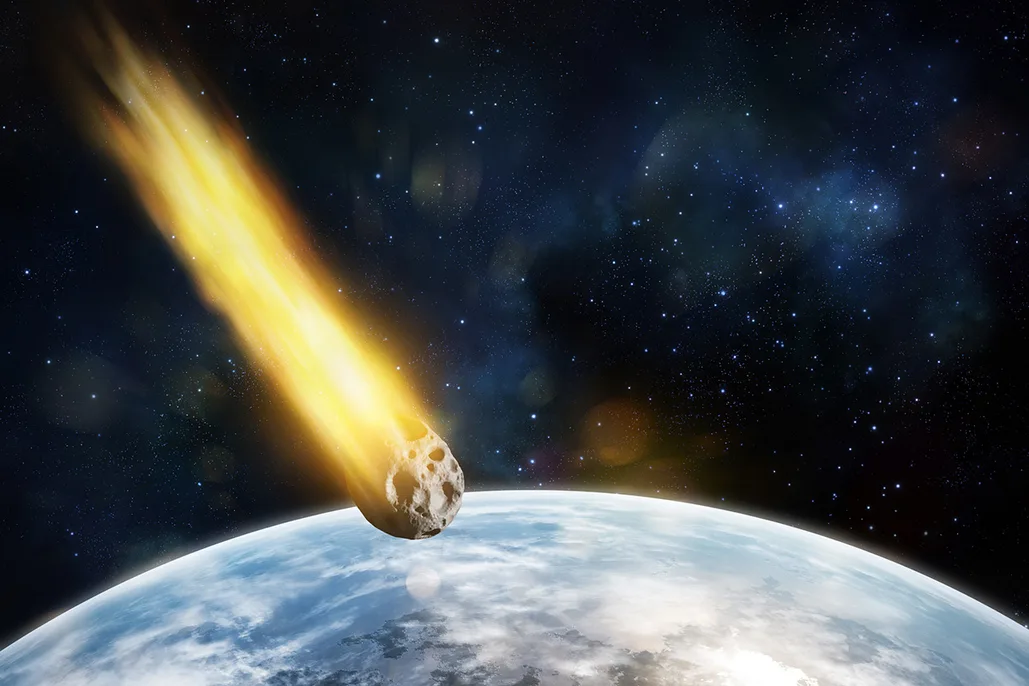
In the vastness of space, asteroids are constantly hurtling toward Earth. While the majority of these cosmic bodies pass by unnoticed, some draw the attention of scientists and astronomers due to their size, trajectory, and proximity to our planet. One such asteroid that has captured the interest of the scientific community is Asteroid 2024 YR4. Scheduled for a close approach to Earth shortly, this asteroid has sparked both curiosity and concern among experts.
In this article, we will delve into the specifics of Asteroid 2024 YR4, including its characteristics, the potential risks associated with its encounter, and what makes this asteroid stand out in the vast array of space objects that cross our path.
Understanding Asteroid 2024 YR4: An Overview
What is Asteroid 2024 YR4?
Asteroid 2024 YR4 is a near-Earth object (NEO) that has garnered significant attention from astronomers. Classified as a member of the Apollo group of asteroids, Asteroid 2024 YR4 follows an orbit that crosses Earth’s orbit, making it a potentially hazardous asteroid (PHA). PHAs are asteroids and comets whose orbits bring them within 7.5 million kilometers of Earth’s orbit, which is about 19 times the distance between the Earth and the Moon.
Discovered in December 2024 by astronomers using advanced space observation technologies, this asteroid has been closely monitored for any signs of a potential impact. While the likelihood of a direct collision with Earth remains low, experts are keeping a close eye on its trajectory to ensure we are prepared for its passage.
Key Characteristics of Asteroid 2024 YR4
- Size: Asteroid 2024 YR4 is estimated to be between 200 to 500 meters in diameter. For context, asteroids of this size are capable of causing significant damage if they were to impact Earth. While the chances of such an event are minimal, scientists still monitor these objects carefully.
- Speed: The asteroid is expected to travel at speeds of approximately 30 kilometers per second (km/s), which is typical for asteroids of its size and orbit. This velocity means that even a small gravitational pull from Earth could alter its trajectory significantly.
- Orbit: As mentioned, Asteroid 2024 YR4 follows an orbit that intersects Earth’s orbit. It takes the asteroid several years to complete one full revolution around the Sun, and during this period, it may come into close proximity to our planet.
The Potential Risks of Asteroid 2024 YR4’s Encounter with Earth
Is There a Risk of Impact?
Given its size and proximity to Earth, one of the primary concerns surrounding Asteroid 2024 YR4 is whether it poses any real risk to our planet. At the moment, the chances of a direct impact are extremely low. Scientists have mapped the asteroid’s trajectory and continue to monitor its path to rule out the possibility of a collision.
The concept of an asteroid impact has been a source of both scientific study and public fascination. Historically, asteroid impacts have been associated with significant events in Earth’s history, such as the mass extinction of the dinosaurs. However, most near-Earth objects, including Asteroid 2024 YR4, will pass safely without causing harm.
That being said, even a small change in its velocity or trajectory could alter the course of the asteroid, making it important to monitor its path continuously. Several space agencies, including NASA and the European Space Agency (ESA), use a combination of ground-based and space-based telescopes to track and predict the movement of such objects.
What If Asteroid 2024 YR4 Did Impact Earth?
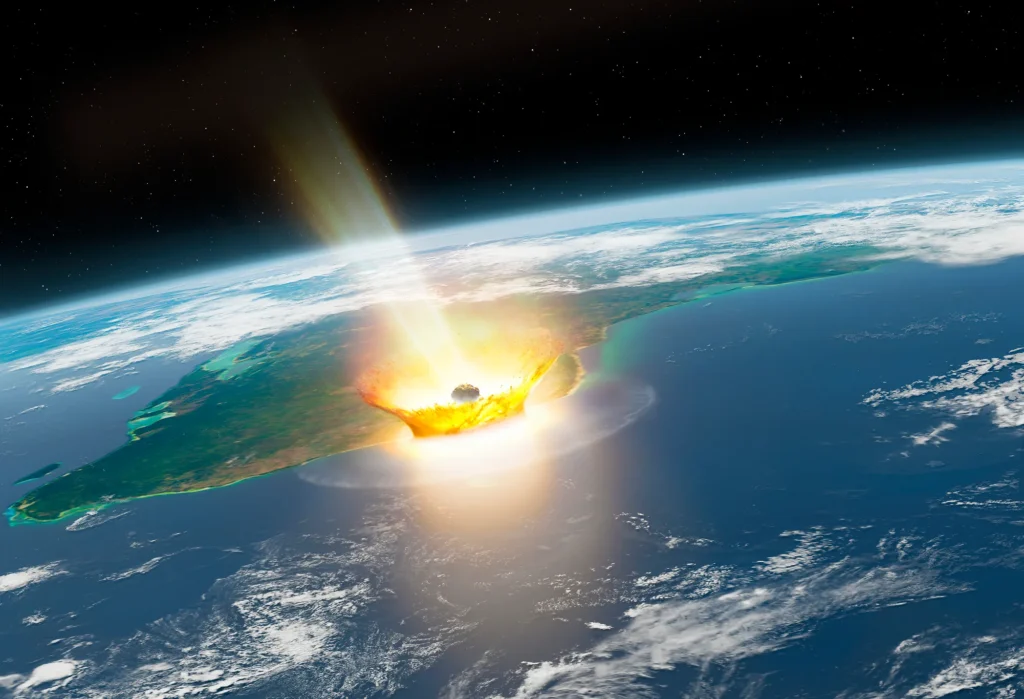
While the chances of an impact are extremely low, it’s still worth considering the hypothetical scenario of Asteroid 2024 YR4 hitting Earth. Depending on its speed, size, and where it impacts, an asteroid of this magnitude could cause significant destruction.
A collision with a large asteroid can release an enormous amount of energy, equivalent to several nuclear explosions. In the worst-case scenario, the impact could create widespread devastation in the surrounding area, with effects like massive tsunamis, wildfires, and a global cooling event caused by debris in the atmosphere.
However, the chances of such an event are very slim. As of now, there is no indication that Asteroid 2024 YR4 will follow an impact trajectory.
Monitoring and Mitigation Strategies
To prepare for any potential asteroid threat, scientists and space agencies have developed various strategies to mitigate the risks. For instance, the Planetary Defense Coordination Office (PDCO) under NASA is tasked with identifying and tracking potentially hazardous asteroids.
If an asteroid like Asteroid 2024 YR4 were to be on a collision course with Earth, several mitigation methods could be considered, including:
- Deflection: This strategy involves altering the asteroid’s trajectory using a spacecraft. Techniques like “kinetic impact” (using a spacecraft to collide with the asteroid) or gravity tractors (using a spacecraft’s gravity to slowly tug the asteroid) are being studied.
- Disruption: If deflection is not feasible, scientists may attempt to disrupt the asteroid by detonating a nuclear device near it. The goal is to break the asteroid into smaller, less harmful pieces that would burn up in Earth’s atmosphere.
The Importance of Studying Asteroids Like 2024 YR4
Why Is It Important to Monitor Asteroids?
Asteroids, including Asteroid 2024 YR4, offer valuable insight into the early solar system’s formation. By studying their composition, orbit, and structure, scientists can learn more about the materials that made up the planets and moons billions of years ago. In fact, some scientists believe that studying asteroids could reveal clues about the origins of life on Earth.
Furthermore, understanding the risks posed by near-Earth objects is crucial for planetary defense. With the increasing number of asteroids being discovered each year, it’s essential that we continue to develop new technologies and strategies to detect and deflect any threats that may come our way.
The Role of Space Agencies in Asteroid Tracking
Several space agencies, including NASA, the ESA, and private entities like SpaceX, play a critical role in monitoring asteroids like Asteroid 2024 YR4. These organizations utilize a combination of optical and radar telescopes to track the asteroid’s movement and predict its path with precision.
For example, NASA’s Near-Earth Object Program is dedicated to finding, tracking, and characterizing NEOs. The program works in collaboration with observatories and telescopes around the world to identify potentially hazardous objects. They use a range of technology, including infrared observations, to assess the size, composition, and velocity of asteroids.
Conclusion
While the chances of Asteroid 2024 YR4 colliding with Earth are exceedingly small, its passage serves as an important reminder of the dynamic and unpredictable nature of the cosmos. As we continue to study and monitor asteroids like 2024 YR4, we gain a better understanding of both the potential threats and the opportunities for scientific discovery that they present.
In the meantime, scientists and space agencies are working tirelessly to ensure that we are prepared for any eventuality. Through continued research, monitoring, and development of planetary defense strategies, we can ensure that we are ready to handle the challenges posed by asteroids, both today and in the future.
By staying vigilant and informed, we can continue to protect our planet from the potential dangers that lurk in space, while also benefiting from the knowledge these celestial bodies offer about our solar system’s past. Asteroid 2024 YR4 may be one of many objects that cross our path, but it reminds us how interconnected we are with the universe beyond.
Read more: Mastering Weather Reading: A Guide to Understanding the Elements