


David Moyes – A Career Built on Resilience and Reluctance
David Moyes is not the type of manager who often makes headlines for flamboyant touchline antics or revolutionary tactical innovations. Instead, his reputation has been carved through years of quiet determination, an unwavering commitment to structure, and a talent for squeezing the very best out of players others might overlook. The Scottish manager’s career has been a testament to grit over glamour, emphasizing stability and steady progress over short-lived flashes of brilliance. While not every chapter in his managerial journey has been a triumph, the arc of his career reflects a man who understands football as a long-term craft rather than a series of quick wins.
For some, Moyes represents a throwback to a more pragmatic era of football—a time when hard work, organization, and discipline were valued above social media virality. For others, he is the epitome of adaptability, a coach who has weathered the storms of failure and emerged stronger, reshaping his reputation with every challenge. What makes Moyes particularly intriguing is that, despite his low-key persona, he has shaped the destinies of clubs in ways that have left lasting legacies.
Early Years – From Scottish Roots to Player-Manager
Born in Glasgow in 1963, David William Moyes grew up in a football culture that valued toughness, camaraderie, and tactical awareness. His playing career as a central defender spanned clubs like Celtic, Dunfermline Athletic, and Preston North End. While his time as a player was respectable rather than spectacular, it laid the foundation for his later career—he was a student of the game even on the pitch, often regarded as a natural leader in the dressing room.
Moyes’ first taste of management came at Preston North End, where he was appointed manager in 1998 after serving as a player-coach. His work there was nothing short of transformative. He inherited a club struggling in the lower leagues but gradually molded them into promotion contenders. With a focus on youth development, disciplined defending, and efficient attacking, Preston under Moyes became a well-drilled unit that punched well above its weight.
Everton – The Blue-Collar Revolution
When Moyes took over Everton in March 2002, the club was in danger of becoming a perennial struggler in the Premier League. Financial constraints meant that big-money signings were out of the question, and survival often felt like the main objective. Yet, Moyes didn’t just keep the club afloat—he redefined its identity.
Building a Competitive Side on a Shoestring
At Everton, Moyes became known for his ability to spot undervalued talent. He signed players like Tim Cahill, Mikel Arteta, and Leighton Baines—footballers who may not have been global stars when they arrived but became cornerstones of the team. His recruitment policy was shrewd and often based on work ethic, tactical intelligence, and adaptability rather than mere flair.
Discipline and Organization as Weapons
Everton under Moyes were renowned for their defensive solidity and workmanlike approach. They might not have played the most expansive football in the league, but they were a nightmare to break down. Moyes drilled his sides to be disciplined without the ball and direct in attack, maximizing every opportunity to score. This approach paid off spectacularly in 2004–05 when Everton finished fourth, securing a Champions League qualifying spot despite having one of the lowest budgets in the top flight.
Legacy at Goodison Park
Moyes left Everton in 2013 with the club firmly established in the top half of the Premier League. He had turned a relegation-threatened outfit into European contenders and had done so with a fraction of the financial resources available to rivals. His departure for Manchester United was seen as both the end of an era and a testament to his achievements.
The Manchester United Challenge – A Poisoned Chalice
When Sir Alex Ferguson handpicked David Moyes as his successor at Manchester United in 2013, it was presented as the passing of a torch between two Scotsmen who shared a commitment to hard work and traditional football values. However, Moyes quickly discovered that the scale and scrutiny at United were worlds apart from what he had experienced at Everton.
The shadow of Ferguson loomed large, and Moyes faced an aging squad, high expectations, and a fanbase accustomed to winning. His cautious tactical approach, which had been effective at Everton, was ill-suited to a club that demanded attacking dominance and silverware. Within ten months, he was dismissed—a decision that dented his reputation and led many to question whether he could thrive at the highest level.
Redemption Abroad and at Home
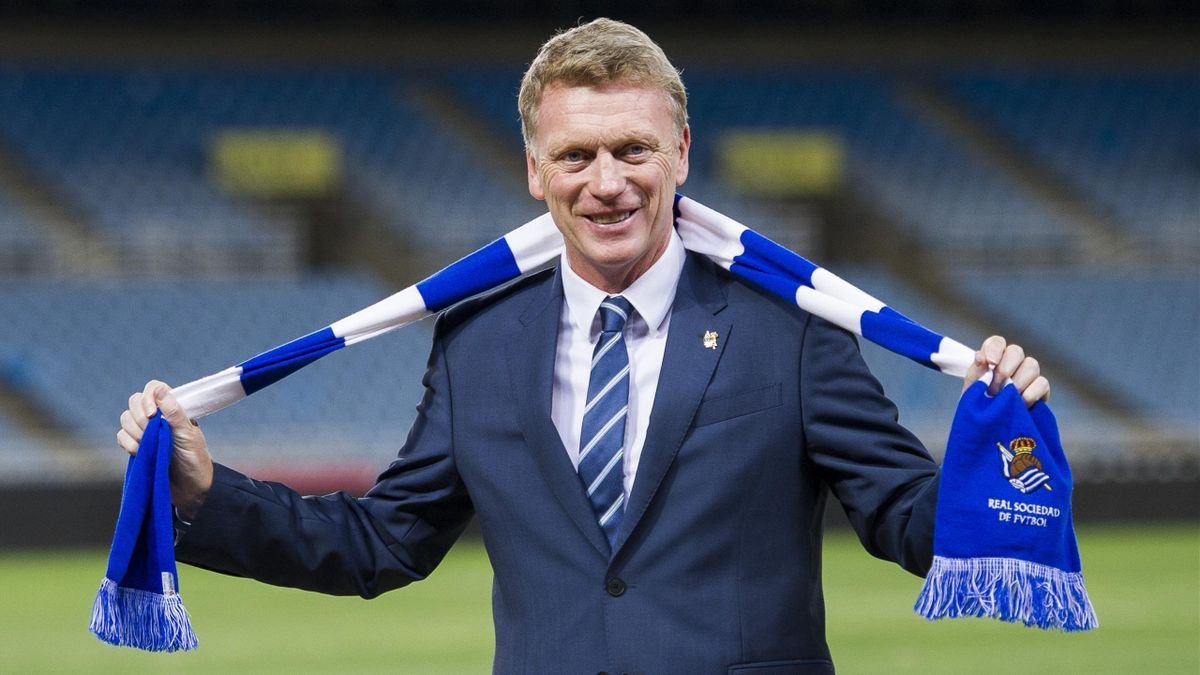
After leaving United, Moyes sought redemption overseas with Real Sociedad in Spain. While his time there was mixed, it demonstrated his willingness to step out of his comfort zone and adapt to a new football culture. A brief and difficult stint at Sunderland followed, where he was unable to prevent relegation, further clouding his managerial record.
Yet, in 2017, West Ham United came calling. Moyes was tasked with saving the Hammers from relegation—something he accomplished with typical pragmatism. His first spell ended with the club choosing not to renew his contract, but football’s cycles are unpredictable, and in 2019, West Ham turned to Moyes once again.
West Ham United – From Survival to European Glory
Moyes’ second spell at West Ham marked a remarkable renaissance in his career. Initially brought in to ensure survival, he went beyond expectations, turning the club into European contenders and rekindling pride among the fanbase.
Tactical Flexibility and Squad Management
This version of Moyes showed more tactical adaptability. While his teams still valued structure and discipline, he incorporated quicker transitions, intelligent pressing, and more dynamic attacking patterns. Players like Declan Rice, Jarrod Bowen, and Michail Antonio flourished under his guidance.
The Europa Conference League Triumph
The crowning achievement came in 2023, when West Ham won the UEFA Europa Conference League—Moyes’ first major trophy as a manager. The victory was a career-defining moment, proof that his methods could deliver silverware on a European stage. It was also a personal redemption arc for a man once dismissed as outdated and overly cautious.
The Moyes Philosophy – Grit Over Glamour
Throughout his career, David Moyes has been consistent in his core beliefs: discipline, teamwork, and maximizing resources. His teams may not always play with dazzling flair, but they are organized, committed, and prepared for the fight.
In an era when many managers are celebrated for possession-based artistry or complex pressing systems, Moyes remains unapologetically results-driven. This is not to say he is tactically primitive—rather, he is a pragmatist, willing to adapt but never abandoning the fundamentals that have defined his success.
Criticism and Misconceptions
Moyes has often been labeled as a “safe pair of hands” rather than a visionary. Critics argue that his style can be overly conservative, especially in big games. Others suggest that he thrives best as an underdog rather than as a leader of title-chasing teams.
However, this overlooks the reality that his greatest successes have come in environments where stability was desperately needed. Moyes has repeatedly shown he can rebuild squads, nurture young talent, and instill a competitive spirit in clubs that were drifting aimlessly.
Legacy and the Road Ahead
As of the mid-2020s, Moyes’ future in football remains an open question. Whether he continues to lead West Ham into further European campaigns or takes on a new challenge elsewhere, his legacy is secure: he is a manager who builds foundations, not just quick-fix solutions.
For the players who have thrived under him, Moyes has been more than a coach—he has been a mentor. For clubs that have employed him, he has been a stabilizing force. And for fans, he has been proof that you don’t always need glamour to achieve glory.
Conclusion
David Moyes’ career is a story of perseverance, adaptability, and quiet triumphs. From Preston to Everton, from the struggles at Manchester United to the triumph in Prague with West Ham, his journey reflects the truth that football success is not always about dazzling brilliance—it can also be about relentless effort, tactical discipline, and a refusal to be beaten by circumstances.
In the grand tapestry of football history, Moyes might never be remembered as a revolutionary tactician or a serial trophy winner, but he will be recognized as the reluctant architect of grit and glory—a manager who built teams capable of punching above their weight and leaving lasting legacies. And in an age obsessed with instant success, perhaps that is the greatest victory of all.
Read more: Dalton Gomez: The Private Life of Ariana Grande’s Low-Profile Ex